
Build an editorial research queue with n8n and Gemini
Collecting links is easy. Producing a useful briefing requires deciding which stories are recent, removing repeats, keeping the sources visible and reviewing claims before publication.
The AI Research Brief and Content Drafts template separates that process into evidence collection, research and drafting.
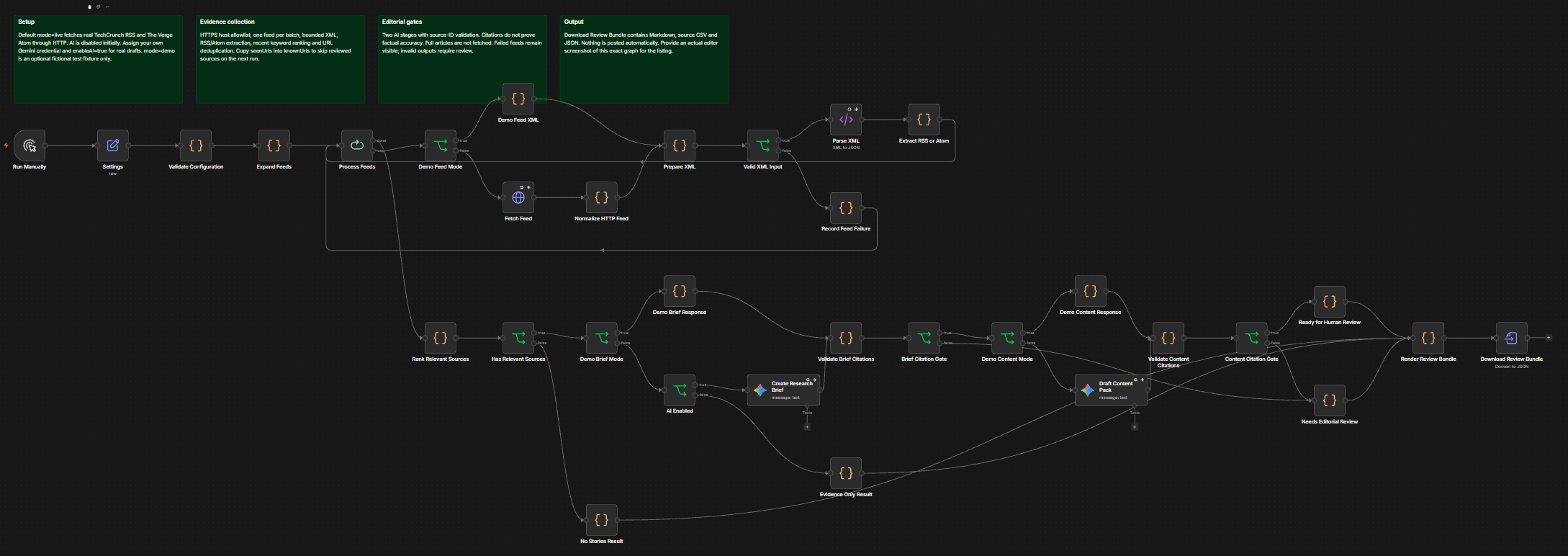
The actual n8n workflow included with the template. Numbered sticky notes explain each stage from configuration through human review.
Start with the evidence
The workflow collects configured RSS and Atom feeds one at a time. It removes common tracking parameters, checks publication dates and scores stories against your keywords. A source register gives every selected story an ID, such as S001, alongside its original URL and publication date.
The score measures relevance and recency. It does not measure popularity or establish that an article is correct. Failed feeds appear in the output so the editor can see where coverage is incomplete.
Keep research and drafting separate
The first Gemini stage creates findings from the selected feed excerpts. Each finding must cite an available source ID and use limited confidence. The second stage turns the validated briefing into LinkedIn and newsletter drafts.
Both stages have citation gates. Unknown source IDs route the bundle to editorial review. Links in the rendered briefing come from the original source register, which avoids relying on URLs invented by the model. These checks establish which source a draft cites; an editor still needs to confirm that the source supports the wording.
Review a portable bundle
The final node creates a downloadable JSON bundle containing the briefing, content drafts, Markdown, a source CSV and any review issues. Nothing is posted automatically.
Copy the bundle's seenUrls array into Settings → knownUrls before the next run to skip previously reviewed stories. The workflow makes this ledger explicit instead of silently storing data between executions.
The default mode fetches real feeds with AI disabled. An optional demo uses fictional stories and simulated AI responses, so you can explore the complete path without an API key. Live Gemini generation requires your own credential and may incur charges through your account.
Understand the four outcomes
review_ready: the briefing and drafts passed the structural and citation checks; human review is still required.needs_review: an AI request or validation gate failed; inspect the recorded reasons.evidence_only: source collection completed while AI generation was disabled.no_stories: no recent unseen stories matched the configured settings.
What was tested
The canonical workflow completed live collection and a full Gemini run that produced a cited research briefing plus LinkedIn and newsletter drafts. Fresh clean recreations also passed live collection, normal and empty demos, malformed-feed handling, and invalid-citation rejection.
Revision 0.1.3 reorganized the canvas documentation into an overview and five numbered stages. A fresh recreation of that revision passed the fictional normal demo and produced a downloadable review bundle.
Research is based on feed titles and excerpts rather than full articles. Citation checks confirm that referenced source IDs exist; they do not verify every claim. Review the original articles, uncertainty notes and final wording before publishing generated content.
Have a process eating your team's time?
Book a free 45-minute scoping call — no obligation.
Book a call